A sweeping federal indictment has renewed concerns about corruption in college athletics. As a result, a college basketball point-shaving scandal is back in the national spotlight. The case is tied to Las Vegas gambler Shane Hennen. It alleges a coordinated sports betting scheme across dozens of games and nearly 20 college programs. Federal investigators believe the activity reflects an organized pattern, not isolated misconduct. To understand why these schemes persist, we spoke with Geoff Schumacher. He serves as vice president of exhibits and programs at The Mob Museum and has decades of experience studying organized crime.

What Point-Shaving Means in College Basketball
Point-shaving happens when players influence the final score without necessarily trying to lose. Specifically, the goal is to affect the margin of victory. That margin determines whether bets tied to the spread win or lose. For example, missed free throws can matter. Likewise, late fouls can shift the final margin. Even a brief drop in effort can change outcomes. However, these actions can look normal to fans and coaches. Because the team can still win, point-shaving is hard to detect. Instead, sportsbooks often spot it first. Then investigators follow the betting trail.

Why This Case Is Different
Schumacher says the scope of this investigation makes it unusual. Federal authorities are reviewing 29 games across 17 colleges. Therefore, the overlap suggests coordination rather than coincidence. In other words, it does not resemble random mistakes by one athlete or one team. Isolated violations rarely span that many programs. “When that many schools and games are connected, it becomes systemic,” Schumacher explains. As a result, federal prosecutors get involved. They see a wider operation, not a local problem. Moreover, repeated patterns across schools can become evidence by themselves. That is why the case escalates quickly once links appear.
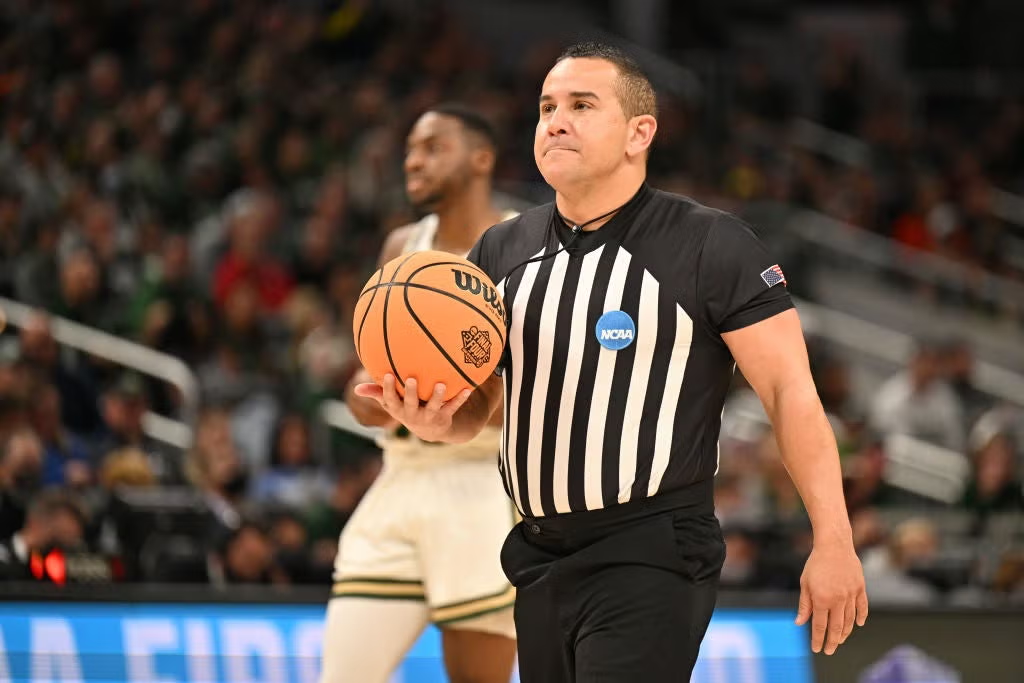
Why College Basketball Remains Vulnerable
College basketball has long been attractive to gamblers. However, modern technology has increased the risk. Sports betting apps now sit on smartphones. So access is instant and constant. In addition, the barrier to entry is low. That makes temptation harder to avoid. Meanwhile, student-athletes face unique pressure. Most do not earn professional salaries. Yet many still face tuition, housing, and day-to-day expenses. Additionally, some carry family responsibilities. As a result, financial strain can create vulnerability. Outside influence then becomes harder to resist. Even so, a small decision can bring huge consequences. For example, a single message can trigger scrutiny. Likewise, one bad contact can open the door to a scheme.
Does Legal Sports Betting Make Things Worse
Some critics blame legalized betting for corruption. Sports wagering existed in the United States long before legalization. It thrived underground for decades. So games were still manipulated. Money still changed hands. The key difference today is regulation and oversight. In states like Nevada, sportsbooks must monitor betting limits and wagering behavior. Consequently, they can flag irregular patterns faster. They also report suspicious activity. That transparency helps investigators. By contrast, illegal sportsbooks never offered that level of monitoring. Instead, underground markets hid activity from public view. Therefore, corruption could linger longer without detection.
Echoes From Past Point-Shaving Scandals
This case is not unprecedented. College basketball faced major point-shaving scandals in the 1950s and 1960s. Later, similar cases surfaced in the 1970s. Those investigations often relied on wiretaps and long-term surveillance. In many instances, cases took years to resolve. Still, Schumacher says the mechanics remain familiar. Players were pressured or incentivized. Middlemen handled payments and communication. Meanwhile, law enforcement followed betting trends. The technology has changed. Nevertheless, the core playbook has not. That continuity is what makes modern cases feel so familiar to investigators.
How Technology Cuts Both Ways
Modern technology increases exposure to gambling. At the same time, it improves detection. Digital betting creates permanent records. Likewise, communication often leaves data trails. Sportsbooks can share information with regulators and law enforcement. As a result, patterns can emerge faster than in past decades. Schumacher says technology cuts both ways. It enables schemes. However, it also helps uncover them earlier. Therefore, enforcement can move quicker once anomalies appear. In addition, suspicious lines and sudden betting spikes can trigger real-time alerts.
A Warning for Bettors
Some bettors believe college sports are immune to manipulation. No level of sport is safe from influence. Wherever money exists, risk follows. Therefore, pressure creates opportunity. College athletics are no exception. Even so, many fans assume the game is “too pure” to be touched. That belief is risky. Instead, history shows repeated vulnerabilities. As a result, bettors should treat integrity as a real factor, not a myth.
Why Education Is Critical in the NIL Era
Many student-athletes do not understand the legal risks tied to gambling. As a result, small actions can escalate quickly. Sharing inside information can trigger investigations. Likewise, placing a single wager can lead to discipline or charges. Schumacher says education must come first. Athletes need clear guidance. Therefore, schools should explain legal consequences in direct terms. They should also explain long-term damage. In the NIL era, this matters even more. Financial access has increased. Meanwhile, outside pressure has followed. Consequently, athletes may face more messages, more temptation, and more risk. For example, casual “advice” from a stranger can be a test. Similarly, a request for “harmless” info can be a trap.
What Comes Next
Legal sports betting continues to expand nationwide. And there will be more federal investigations. The Department of Justice has a clear interest in protecting regulated markets and public trust. This case is a warning for schools, athletes, and bettors. As a result, oversight must improve. In addition, education must expand. Enforcement must remain aggressive. College basketball’s history offers clear lessons. Ultimately, ignoring them almost guarantees repetition. .
Special thanks toVanessa Thill, senior account executive at The Vox Agency, for her assistance in coordinating this interview
The Mob Museum
300 Stewart Avenue
Las Vegas, NV 89101
Website:
www.themobmuseum.org

About the Author

Discover more from JUSTNOWNEWS®
Subscribe to get the latest posts sent to your email.